
Għand il-Vegan · Season 5, Episode 2
If a product says “plant-based” on the front, can you assume it’s vegan? As we put it on the show, “Jekk prodott jgħid ‘plant-based’, nistgħu nassumu li huwa vegan? Mhux bilfors.” The two terms often appear side by side. They can describe the very same meal, but they tell us different things about the food and the choices people make.
What does plant-based mean?
A plant-based diet is built around foods such as vegetables, fruit, grains, beans, lentils, nuts and seeds. Some people use the term to mean they eat entirely plant-based meals. Others use it to mean that plants make up most of what they eat, while they still have meat, fish, eggs or dairy from time to time.
People may choose to eat this way for all sorts of reasons. They might want to spend less on groceries, try new recipes, reduce their environmental impact or eat more of the foods they enjoy. For some, it starts with something as simple as making their usual pasta sauce with lentils once a week.
What does vegan mean?
For someone vegan, the food choices are part of a wider commitment to avoiding animal exploitation as far as possible and practicable. On the plate, that means leaving out meat, fish, dairy, eggs, honey and other animal-derived ingredients. In everyday life, it can also mean choosing shoes without leather, avoiding cosmetics tested on animals or skipping attractions that use animals for entertainment.
A bowl of pasta with a tomato and lentil sauce can be both plant-based and vegan. At the dinner table, two people can enjoy the same meal for different reasons.
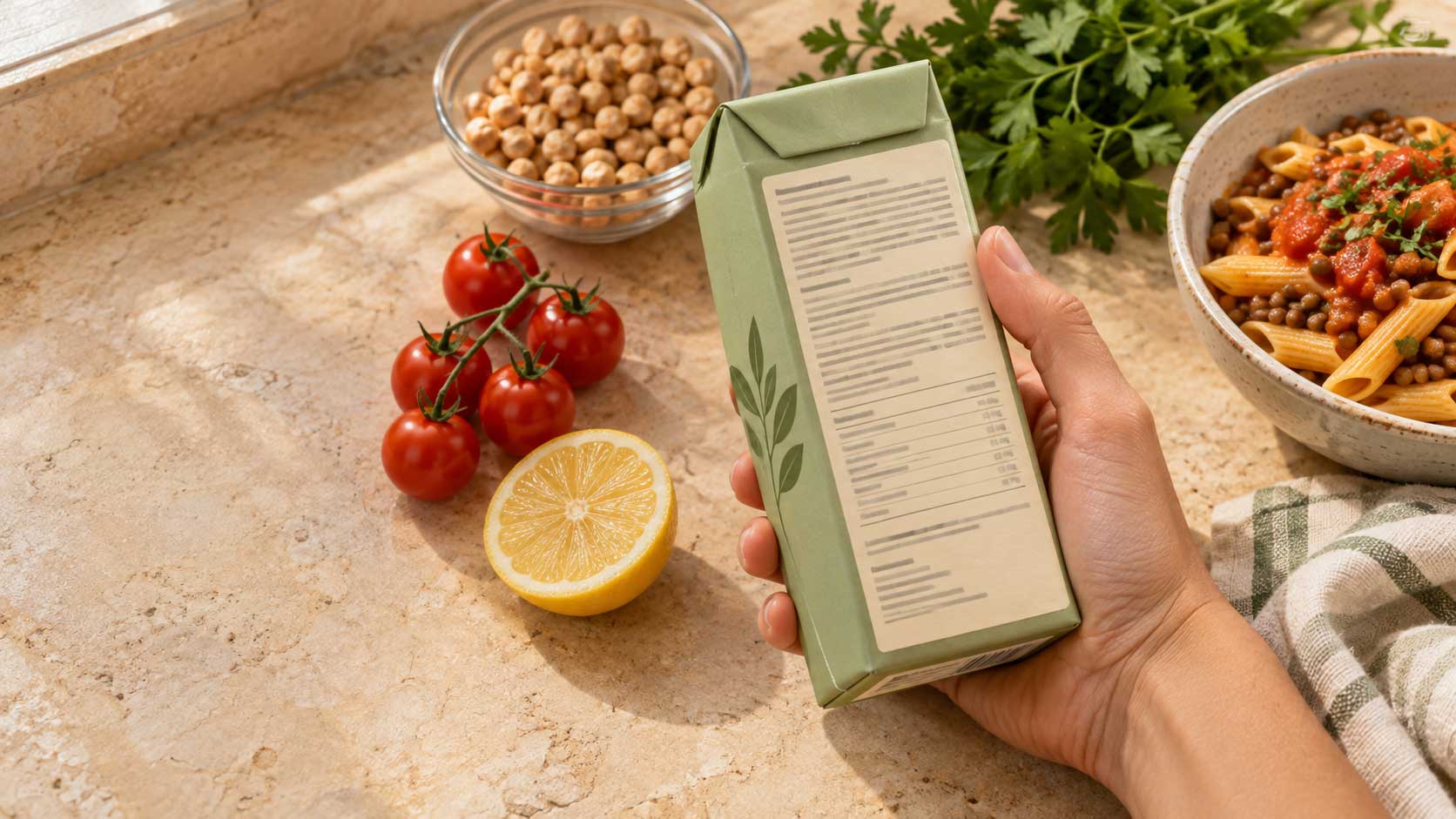
Read the back of the packet.
A product marketed as “plant-based” may still include an animal-derived ingredient. A spread might be made mostly from vegetable oils and contain milk powder. A sauce made with vegetables might also contain cheese. If you’re shopping for yourself or buying something for a vegan guest, check the ingredient list or look for a recognised vegan certification.
A green packet with a big leaf on the front can still be worth turning over. Il-werqa mhix ċertifikat!
The reverse happens too. Some dried pasta, breads, tomato sauces, crisps, biscuits and dark chocolates are made without animal-derived ingredients, even when the packaging says nothing about being plant-based or vegan. These are sometimes called “accidentally vegan” foods. Check the ingredients on the product, as recipes vary from brand to brand.
A vegan biscuit is still a biscuit.
The word “vegan” on a packet tells you something about how the food was made. If you want to compare its sugar, salt or fibre content with another product, look at the nutrition panel. A biscuit is still a biscuit, and a green symbol won’t magically turn it into broccoli.
So the next time you see “plant-based” on a packet, take a moment to turn it over. If you’re cooking for a vegan guest, that quick check can be the difference between buying a perfectly good jar of tomato sauce and getting home to discover it contains cheese.
